Loading…

TOUR

Media
MERCH




.webp)
NEWS
Major Sports Events in 2023
Healthcare Innovations
Climate Change Initiatives
Global Economic Outlook
Latest Technology News
ABOUT
After years spent in silence and self-erasure, Sub Urban returns with If Nevermore, a gutsy sophomore album and a raw reclamation of self. Forged from heartbreak, betrayal, and the slow corrosion of identity in the digital age, the record surges with punk verve, baroque synth arrangements, amped dance, eerie balladry, and glitched-out collapse. It’s a genre-fractured renewal from an artist who withdrew from view completely. Herein, the New Jersey-bred singer, songwriter, and producer tears into the subjects of envy, detachment, and new and old love with impassioned precision. With If Nevermore, Sub Urban reclaims his voice from the void.
At the age of 19, Daniel Virgil Maisonneuve released what would become his first RIAA-certified Platinum record, “Cradles,” pushing him abruptly into the spotlight. The sudden exposure combined with an industry fixated on short termism led to a debut LP, Hive, beloved by many for its bold aesthetic, but which he now considers hollow: “It lacked substance. It was a cohesive work with polished mixing and production, but little I can draw back to emotionally.” And then Sub Urban all but disappeared — he committed to unlearning everything he’d absorbed on his rise, and reconnected with the instincts that drove him to make music in the first place.
If Nevermore is the sound of reckoning with disillusionment, isolation and survival. “This album is my adult awakening,” Sub Urban says. The fallout of broken relationships, industry betrayal, and the lingering toll of illness all bled into the record’s making — each leaving its own scar.
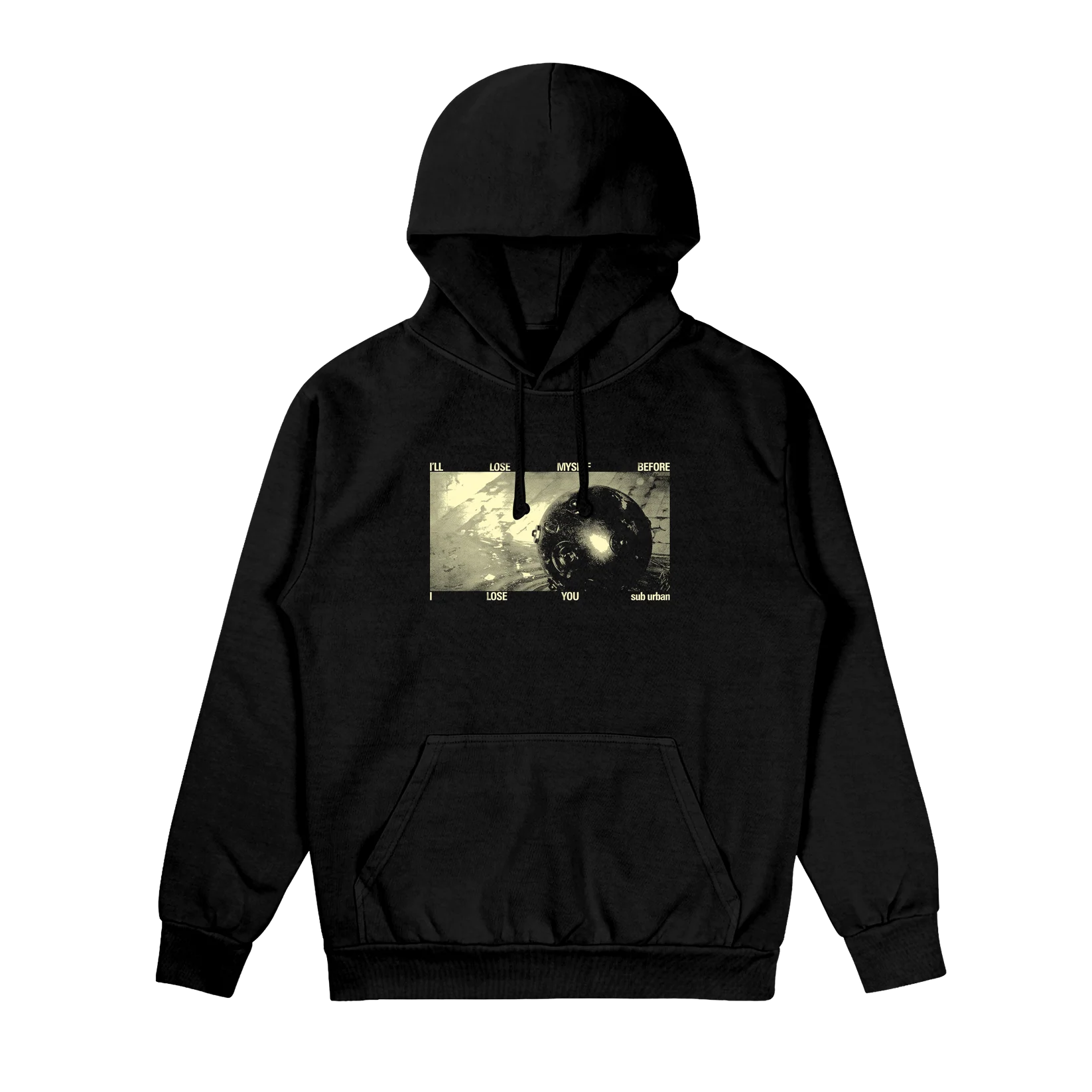
“I realized I was falling victim to the hive-minded homogenization of digital media, and my experiences, ideas, and memories were becoming less and less my own,” Sub Urban says, describing the catalyst culture of TikTok that latched onto his early music. “Everyone converging on the same ideas quicker, chasing the same melodies, and taking less risk amid constant fear of being censored or deplatformed. We handed over art to the tech industry.” If Nevermore is his confrontational retort to that soullessness — made in isolation, free of the panopticon’s gaze, with a conviction for vulnerability and openness. Every track on the record is associated with a particular emotion: “Clip Thru U” explores fear and dissociation; “Stay Still” delves into self-destruction and delusion; “What You Sow” — his spotlight track — is a love song cloaked in a warning, a threat dressed in posture. “You reap more than what you sow,” he sings, “I’ll lose myself before I lose you.” Simple, sharp, biting, and suffused in expressive instrumentation.
Sonically, If Nevermore fuses hyper-modern aesthetics with visceral feeling. Techno, new wave, shoegaze, and chamber pop all pulse throughout, bound together by Sub Urban’s punkish sensibility and interest in the uncanny. Strings sound almost real, but not quite — blurred in a haze of distortion, pitch-shifted vocals, or synthetic reverb. He calls the album “a commentary on organic vs. digital,” going on to explain, “When something sounds like an instrument we all know and love — a piano, a violin, the human voice — it triggers recognition. But if it’s emulated or drowned in processing, the confusion delivered by your brain hearing something familiar that it can’t fully place is weirdly beautiful.” Throughout the album, these strange textures mimic reality without fully embodying it, creating a sort of vertigo that mirrors Sub Urban’s own disconnection — and eventual reconnection — with the world around him. If Nevermore is a record haunted by artificiality, and in that haunting its songs unearth something very human.
Songs like “Mycelium Eyes” — the revelatory opener that works through grief, psychedelic awakening, and rage — evoke the sensation of falling into a past dream, or watching memories collapse in slow motion. The self-deprecatory “Skinny Loser” is wrapped in lo-fi electronics that make it play like a corrupted diary/blog entry. “See Myself,” about feeling invisible and unable to confront the truth, repeats a dejected mantra: “I don’t wanna see myself.” And “Stay Still” is a merry groove veiled in schizophrenic horror, its wry acceptance of self-destruction sung in a ghostly falsetto: “I just deserve this / ’Cause I like the way it feels.”
The album’s emotional palette is consistent, but there are no repeat messages here — Sub Urban made sure of it. Instead the songs are bound by atmosphere: suffocation, confrontation, and, ultimately, some clear-eyed distance. And through all of it, there’s a creeping, electrifying tenderness.
Thus, If Nevermore is both a purge and a reckoning. A dance record for the disconnected. A punk set for the digitally orphaned. A pop LP made by someone who believes music should cut deep. And, at its core, it’s an album that finds Sub Urban pleading with the world to feel real again.
Subscribe